Chicken Francaise is a French-inspired Italian-American dish that has been a restaurant classic for decades, but it’s simple and easy to make at home with pantry staples and about 40 minutes.

Today we’re making one of my favorite stovetop chicken dinners: Chicken Francaise, AKA Chicken Francese, AKA Chicken French.
What is Chicken Francaise?
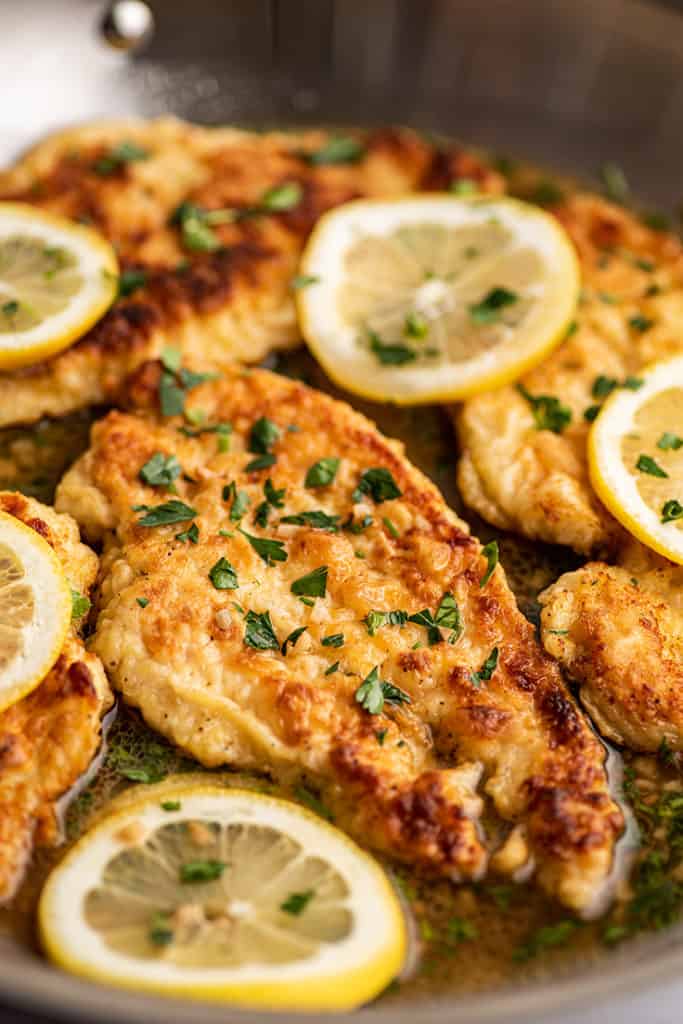
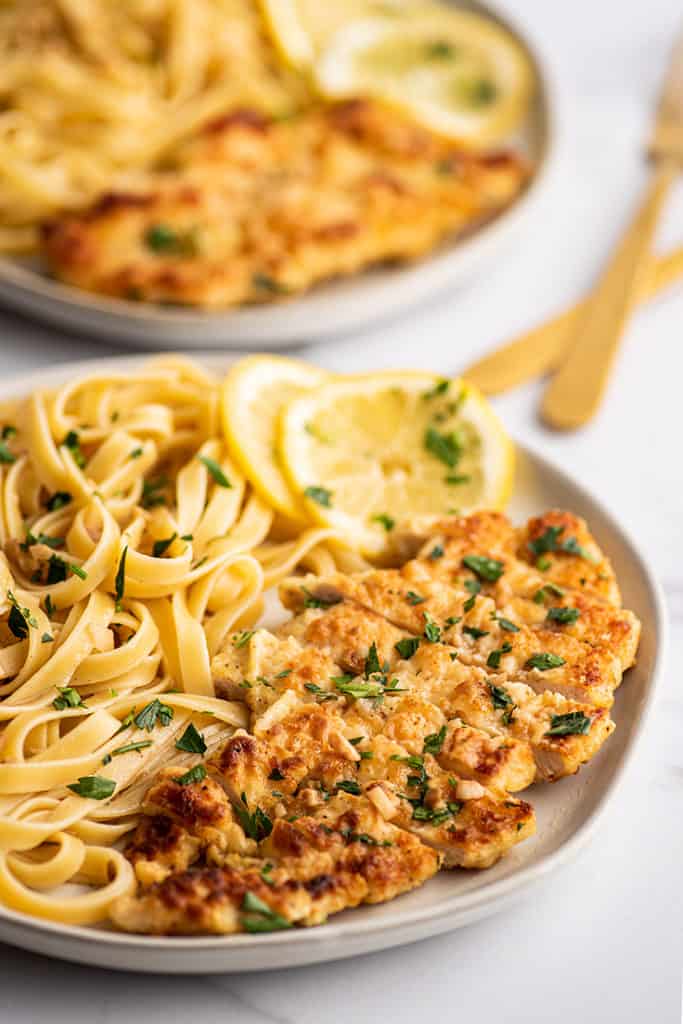
Chicken Francaise is thin chicken cutlets dredged in egg and flour, fried, and served with a simple (and delicious) lemon, butter, and white wine sauce. Typically it’s paired with pasta, but rice lovers, feel free to swap out that pasta for rice.
A Little Chicken Francaise/Francese History for You: Though it has French/Italian names, Chicken Francaise is actually an Italian-American chicken dish that originated in Rochester, NY.
Italian immigrants in the area swapped the veal in the French-inspired Italian dish, Vitello alla Francese for the more economical and readily available chicken, and Chicken Francese was born.
How do you say Chicken Francaise?
And because I love this sort of thing, we have to have a quick chat about pronunciation. The French pronunciation of française is “frahn-sayze.” For Chicken Francese, the Italian pronunciation is “fran-che-zeh.”
In practice, it seems to be more like ¯_(ツ)_/¯. Just as this recipe is a delightful melting pot of cultural influences, so too is the pronunciation.
I’ve heard everything from FRAN-sayze to frahn-say-zee from chefs. Most common seems to be fran-sayze (with an Italian start and French ending). And if you’re too worried about saying it wrong, just remember, Chicken French is also correct.

Lemon Lovers Only
Word of warning, while this dish incredibly good, if you don’t love lemon, it’s not for you.
Chicken Francaise is an intensely lemony experience. The first time I tried it, after bite one, I was pretty sure didn’t care for the aggressively bright tartness of the sauce.
But, by bite three, when my tastebuds adjusted their expectations, I was like, this is all I want to eat for the rest of my life. 😉
So I highly recommend it, but know what you’re getting in to.
Some Tips for Success
If you don’t often cook breaded chicken on the stove or usually find doing so stressful, I have a few extra tips for you.
- Make sure you’re cooking with chicken that has been prepared correctly. This recipe calls for chicken breasts that have been butterflied and pounded to 1/4-inch thick. This is because the breading on thicker chicken will burn before the meat cooks through. 1/4-inch is thinner than you might think, so double check your first piece with a ruler if you are unsure.
- Depending on the size of your chicken breasts and the size of your pan, you will probably have to cook your cutlets in batches. Between each batch, remove the pan from heat and wipe it out with paper towels so that leftover fond (the brown cooked-on bits left in the pan) does not burn and smoke. You’ll also wipe out your pan before making your sauce so that the dark fond does not give you a cloudy, brownish lemon butter sauce.

More Favorite Chicken Recipes
- Easy Salsa Chicken
- Crispy Lemon Chicken Thighs
- Creamy Chicken Noodle Soup
- Asparagus-stuffed Chicken Breasts
- Chicken in White Wine Lemon Butter Sauce
Recipe Notes
- This recipe will make 2 to 4 servings. When serving with pasta/rice and a vegetable side (I recommend steamed broccoli or green beans ) it makes a good weeknight meal for four, but if making for a big eater or for company, it will generously serve two. If you’d like to double the recipe, hover over the servings in the recipe card and slide the slider.
- Add 1/4 cup of heavy cream to the sauce just before serving to make a creamy Chicken Francaise sauce.
- If you want extra sauce for drizzling over your vegetables (which is delicious), double the sauce and simply extend the simmering time for a couple of minutes because it will take longer to reduce.

Equipment
- Meat mallet or rolling pin
Ingredients
- ▢ 2 medium boneless skinless chicken breasts
- ▢ 1/4 teaspoon salt plus more for the chicken
- ▢ 1/4 teaspoon pepper plus more for the chicken
- ▢ 1 cup ( 120g ) all-purpose flour
- ▢ 2 large eggs
- ▢ 2 tablespoons milk any percentage
- ▢ 4 tablespoons olive oil divided
Sauce
- ▢ 1/4 cup (55g) butter salted or unsalted is fine
- ▢ 2 large garlic cloves pressed or diced
- ▢ 3/4 cup chicken broth
- ▢ 3/4 cup dry white wine*
- ▢ 1/4 cup fresh lemon juice
- ▢ 2 tablespoons minced parsley optional
Pasta
- ▢ 4 to 8 ounces fettuccine or pasta of choice make 2 ounces of pasta per serving
Instructions
- Preheat oven to 200°F and line a baking sheet with parchment paper or foil for easy cleanup. Place a pot of lightly salted water on to boil for the pasta.
Chicken Cutlets
- Cut chicken breasts in half horizontally by placing one hand on top of each chicken breast and slicing the top and bottom into two thin, even pieces.
- Two at a time, cover chicken breast halves in plastic wrap or place them in a large plastic bag and use the flat side of a meat mallet or a rolling pin to pound each chicken piece to 1/4-inch thick*. Sprinkle both sides lightly with salt and pepper.
- In pie tin or shallow dish large enough to fit a chicken breast, whisk together flour, salt, and pepper. In a second shallow dish, whisk together eggs and milk.
- Dip first chicken piece in flour until completely covered. Then dip in egg mixture and then back into the flour mixture. Gently shake the chicken breast so that any extra flour falls off, and transfer the chicken to a plate. Repeat with remaining three pieces.
- In a large skillet, heat 2 tablespoons of the oil over medium-high heat. Once oil is hot, add 2* of the chicken breasts and cook for 1 to 3 minutes per side, until golden and an instant-read thermometer inserted into the center of the breasts reads 165°F.
- Transfer chicken to prepared baking sheet and place in the warm oven. Wipe out pan with a paper towel and repeat with remaining oil and the rest of the chicken.
Sauce
- Add pasta to boiling water and cook according to pasta instructions. Drain and set aside.
- While your pasta cooks, once again wipe out your skillet with paper towels and place it on medium heat. Add butter and once butter is melted, add garlic and cook until garlic is lightly golden and fragrant, about 1 minute.
- Add broth, wine, and lemon juice. Bring to a simmer and cook for 8 to 10 minutes, until sauce is reduced by a little over 1/2, down to about 3/4 cup.
- Add salt and pepper to taste and stir in optional parsley.
- Plate pasta and chicken and spoon sauce over the top. Serve and enjoy!
Notes
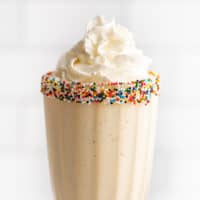
How to make a vanilla milkshake, with tips and tricks for making the best shake possible.

Vanilla milkshakes sometimes get a bad rap as being a little boring, a little, shall we say, vanilla. But you know what?
A good vanilla milkshake is a thing of beauty, and today we’re going to make a really good vanilla milkshake.
A Really Good Vanilla Milkshake Recipe
There are three things we’re going to do to make the best vanilla milkshake possible:
- Start with good-quality ice cream. I’m usually team cheap ice cream for milkshakes, but since we’re not adding other flavors here, you really want a good base.
That chemically artificial vanilla taste you get with some cheap vanilla ice creams is not the foundation we want to build our shake upon.
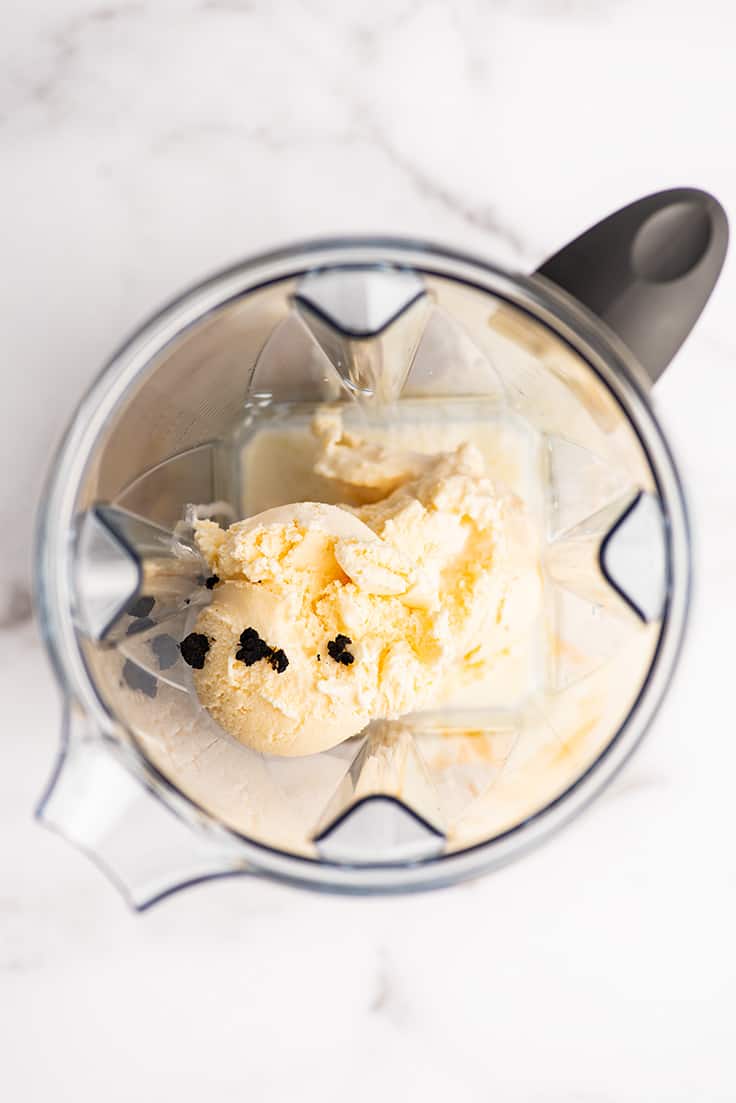
Ramp up the vanilla flavor. This is the secret for the best vanilla shake: adding the seeds scraped from half a vanilla bean or a couple drops of vanilla extract can really put that vanilla flavor over the top. If you don’t have vanilla beans/extract, you can totally skip this step, but if you have them, use them!
Use the right ratio of milk to ice cream. I talk about this in every milkshake post, but this is how to make a milkshake 101. The right ice cream to milk ratio (which is 3 scoops ice cream to 1/2 to 3/4 cup milk) can make or break your shake.

More Vanilla Shake Flavor Combos
Want something a little different? Try the following combos:
- Banana Vanilla Bean Milkshake: Add 1/2 to 1 whole overripe banana before blending (check out this post on ripening bananas quickly if your bananas aren’t quite brown enough). For a thicker shake, use a frozen banana.
- Bourbon Vanilla Bean Shake: Replace 2 tablespoons of the milk in the recipe with 1 ounce (2 tablespoons) of bourbon.
More Milkshake Recipes
- Chocolate Milkshake
- Strawberry Milkshake
- Banana Milkshake
- Oreo Milkshake
- Caramel Milkshake

Recipe Notes
- To make this milkshake without a blender , simply microwave ice cream in a quart-size mason jar for 15 to 30 seconds, until softened, but not completely melted. Then add milk and vanilla beans, screw the lid on tightly and shake until well-mixed. If there are any bits of ice cream that did not mix in, use a spoon to stir them against the sides of the jar so they mix. Then pour into a glass or two and enjoy!
Ingredients
- ▢ 1 1/2 cups good-quality vanilla ice cream about 3 scoops, slightly softened
- ▢ Scraped seeds from 1/2 vanilla bean or 1 teaspoon real vanilla extract
- ▢ 1/2 to 3/4 cup milk * any percentage
- ▢ Whipped cream optional for topping
Instructions
- In a blender, combine ice cream, vanilla bean seeds (or extract), and milk, and blend until pourable.
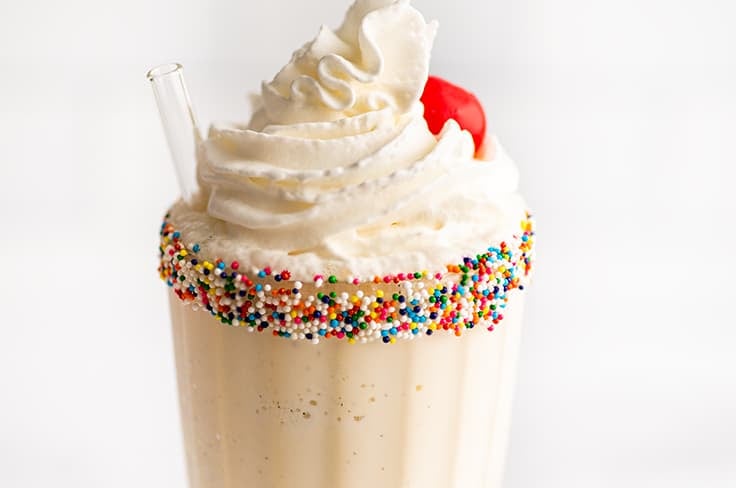
- Pour into a glass, top with whipped cream if desired, and enjoy!
Notes
The quickest and easiest way to make a homemade buttermilk substitute with just two ingredients.

Hey, friends, today we’re going to chat about the whys and hows of making a homemade buttermilk substitute. But if you’re in the middle of a recipe and just need that info quick, here you go:
Buttermilk Substitute Ratio
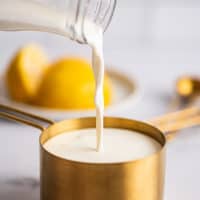
Add the following amount of lemon juice (fresh or bottled) or white vinegar to your measuring cup and fill the cup the rest of the way with milk, stir, and continue baking.
For 1 cup of buttermilk use 1 tablespoon lemon juice/vinegar and fill the rest of the way with milk 3/4 cup use 2 1/4 teaspoons lemon juice/vinegar 2/3 cup use 2 teaspoons lemon juice/vinegar 1/2 cup use 1 1/2 teaspoons lemon juice/vinegar 1/3 cup use 1 teaspoon lemon juice/vinegar 1/4 cup use 3/4 teaspoon lemon juice/vinegar
Okay, back to our buttermilk chat.
What is buttermilk?
Traditional buttermilk is the liquid left behind after churning cream into butter, but these days most of the buttermilk we consume is what’s called cultured buttermilk.
Cultured buttermilk is pasteurized milk with added bacteria cultures to create the thickened, tangy milk that makes our pancakes and waffles taste so good.
The “homemade buttermilk” we’re making today is not true buttermilk, but you can use it pretty much anywhere you’d use regular store-bought buttermilk (except for drinking).
Wait, can I just use milk instead of buttermilk in baking?
Usually no. Buttermilk does more than just add moisture to a recipe. It’s also acidic which helps activate some leaveners (the things that make your baked goods rise) in baking. Without that acidic ingredient, your recipe won’t bake up properly.
This is why when making a buttermilk substitute with milk you add acid in the form of lemon juice or vinegar so your homemade buttermilk can serve all the functions of buttermilk in a recipe.
How long will homemade buttermilk last?
Homemade buttermilk will keep for about a week in an airtight container in your fridge.
However, personally, I prefer to just make it when I need it since it’s hard to tell whether it’s gone off or not because it’s already slightly curdled and sour smelling.
But if you have leftovers you want to use up, check out this post: What to Do With Leftover Buttermilk .
Can you make buttermilk with non-dairy milks?
Yes! Use the same ratio of lemon juice/vinegar to non-dairy milk as you would regular milk. BUT if a recipe specifically calls for whole milk, you may want to use a higher fat/creamier non-dairy milk like cashew, soy, or coconut milk.
Recipes to Make With Homemade Buttermilk Substitute
Here are a few of my favorite recipes you can make with your homemade buttermilk:
- Small Banana Cake
- Small Red Velvet Cake
- Sweet Buttermilk Cornbread Muffins
- Mini Strawberry Breakfast Cake
You Might Also Enjoy
- Homemade Taco Seasoning
- The Perfect Cinnamon Sugar Ratio
- Pumpkin Pie Spice
Ingredients
- ▢ 1 tablespoon lemon juice OR white vinegar
- ▢ Scant 1 cup milk any percentage is fine
Instructions
- Add 1 tablespoon lemon juice or vinegar to a 1-cup measuring cup.
- Fill the cup the rest of the way with milk.
- Let sit for 5 minutes.
- Use as you would buttermilk.
Notes
- 3/4 cup use 2 1/4 teaspoons lemon juice/vinegar
- 2/3 cup use 2 teaspoons lemon juice/vinegar
- 1/2 cup use 1 1/2 teaspoons lemon juice/vinegar
- 1/3 cup use 1 teaspoon lemon juice/vinegar
- 1/4 cup use 3/4 teaspoon lemon juice/vinegar

Chicken Francaise
Equipment
- Meat mallet or rolling pin
Ingredients
- 2 medium boneless skinless chicken breasts
- 1/4 teaspoon salt plus more for the chicken
- 1/4 teaspoon pepper plus more for the chicken
- 1 cup ( 120g ) all-purpose flour
- 2 large eggs
- 2 tablespoons milk any percentage
- 4 tablespoons olive oil divided
Sauce
- 1/4 cup (55g) butter salted or unsalted is fine
- 2 large garlic cloves pressed or diced
- 3/4 cup chicken broth
- 3/4 cup dry white wine*
- 1/4 cup fresh lemon juice
- 2 tablespoons minced parsley optional
Pasta
- 4 to 8 ounces fettuccine or pasta of choice make 2 ounces of pasta per serving
Instructions
- Preheat oven to 200°F and line a baking sheet with parchment paper or foil for easy cleanup. Place a pot of lightly salted water on to boil for the pasta.
Chicken Cutlets
- Cut chicken breasts in half horizontally by placing one hand on top of each chicken breast and slicing the top and bottom into two thin, even pieces.
- Two at a time, cover chicken breast halves in plastic wrap or place them in a large plastic bag and use the flat side of a meat mallet or a rolling pin to pound each chicken piece to 1/4-inch thick*. Sprinkle both sides lightly with salt and pepper.
- In pie tin or shallow dish large enough to fit a chicken breast, whisk together flour, salt, and pepper. In a second shallow dish, whisk together eggs and milk.
- Dip first chicken piece in flour until completely covered. Then dip in egg mixture and then back into the flour mixture. Gently shake the chicken breast so that any extra flour falls off, and transfer the chicken to a plate. Repeat with remaining three pieces.
- In a large skillet, heat 2 tablespoons of the oil over medium-high heat. Once oil is hot, add 2* of the chicken breasts and cook for 1 to 3 minutes per side, until golden and an instant-read thermometer inserted into the center of the breasts reads 165°F.
- Transfer chicken to prepared baking sheet and place in the warm oven. Wipe out pan with a paper towel and repeat with remaining oil and the rest of the chicken.
Sauce
- Add pasta to boiling water and cook according to pasta instructions. Drain and set aside.
- While your pasta cooks, once again wipe out your skillet with paper towels and place it on medium heat. Add butter and once butter is melted, add garlic and cook until garlic is lightly golden and fragrant, about 1 minute.
- Add broth, wine, and lemon juice. Bring to a simmer and cook for 8 to 10 minutes, until sauce is reduced by a little over 1/2, down to about 3/4 cup.
- Add salt and pepper to taste and stir in optional parsley.
- Plate pasta and chicken and spoon sauce over the top. Serve and enjoy!
